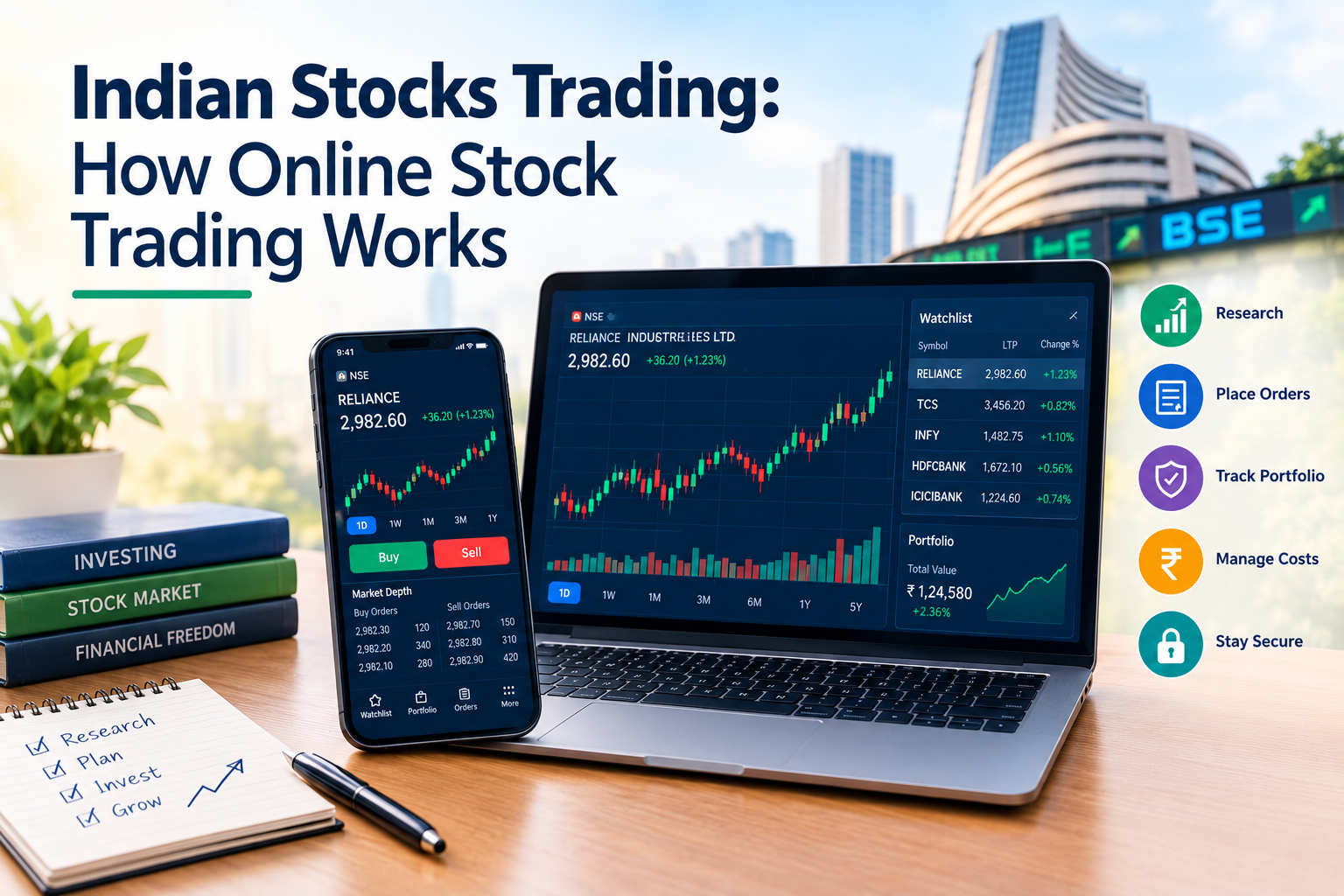
Online Stock Trading has changed the way people access Indian equity markets. Instead of visiting a physical office or relying on manual instructions, investors can research companies, monitor prices, place orders, and review portfolios through digital platforms.
For beginners, however, the convenience of an app can hide the number of steps involved in a stock transaction. Understanding how online stock trading works can make the process easier to follow and can help users recognize the difference between investing through regulated market infrastructure and informal trading arrangements.
What Is a Online stock trading?
A stock, or share, represents an ownership interest in a company. When an investor purchases shares of a listed company through the appropriate market infrastructure, the investment is recorded according to the applicable exchange, clearing, settlement, and depository processes.
The market price of a stock changes as buyers and sellers place orders. Company performance, earnings expectations, interest rates, economic conditions, industry developments, and investor sentiment can all influence prices.
Opening a Trading and Demat Account
In India, investors generally need the appropriate accounts with a regulated intermediary to trade listed securities electronically. A demat account is used to hold securities in electronic form, while the trading account provides access to the market through the intermediary.
The onboarding process generally involves identity verification and other required documentation. Users should review the official terms and charges before completing registration.
How an Online Stock Order Works
After selecting a stock, a user chooses the quantity and order type. A market order is generally intended to execute at the best available price, while a limit order specifies a price condition.
The exact order types and features available can vary by broker and market segment. Before submitting an order, users should check the quantity, price, order type, and validity.
Once submitted, the order is routed through the relevant market infrastructure. It may be executed fully, partially, or not at all depending on market conditions and order availability.
Understanding Bid and Ask Prices
The bid is the price at which buyers are willing to purchase, while the ask is the price at which sellers are willing to sell. The difference between them is called the spread.
Liquidity generally affects how easily an order can be executed without moving the market price. Highly liquid stocks may have more active order books, while less liquid securities can behave differently.
Market Orders vs Limit Orders
Market orders prioritize execution but do not guarantee a particular price. In fast-moving markets, the actual execution price can differ from the price visible when the order was entered.
Limit orders specify the maximum purchase price or minimum selling price for the relevant instruction. However, a limit order may remain unexecuted if the market does not reach the specified level.
What Happens After Execution?
After an order is executed, the transaction goes through the applicable clearing and settlement process. The shares are credited to the investor’s demat account according to the settlement cycle and rules in force for the relevant market.
The trading app may display the position immediately, but the settlement process determines when securities and funds are formally transferred.
Costs Involved in Stock Trading
Investors should understand all applicable costs. These can include brokerage, securities transaction tax where applicable, exchange-related charges, statutory levies, and other fees.
Costs vary depending on the broker, product, and transaction. Reading the current pricing schedule is more reliable than relying on advertisements.
Risk Management
Stock prices can rise or fall, and investors can lose money. Risk management therefore matters even when using a simple online interface.
Users can consider diversification, position sizing, investment time horizon, and their ability to tolerate losses. Leveraged products can create additional risks and require a separate understanding of margin and derivatives.
Research Before Buying
Online platforms may provide financial statements, company announcements, charts, news, and other information. Beginners should learn how to distinguish factual company disclosures from commentary.
Important areas of company research can include revenue trends, profitability, debt, cash flow, valuation, industry conditions, and business risks. No single indicator should be treated as a guaranteed prediction of future performance.
Security and Account Protection
Because Trading Accounts are connected to financial assets, security is essential. Users should enable available authentication features, keep passwords private, and avoid logging in through suspicious links.
One-time passwords and account credentials should never be shared with people claiming to offer trading support through unofficial channels.
Regulated Trading vs Informal Trading
Online stock trading through a regulated intermediary is different from an informal arrangement that merely tracks stock prices. Dabba trading, for example, involves recording transactions outside the recognized exchange framework and is prohibited in India.
Users should therefore verify the intermediary rather than assuming that any website or app offering stock-price-based transactions provides genuine exchange access.
Conclusion
Indian stocks trading through online platforms involves several connected steps: account opening, research, order placement, execution, clearing and settlement, portfolio tracking, and ongoing risk management.
Digital tools can make these steps convenient, but convenience should not replace due diligence. Beginners can benefit from understanding order types, costs, settlement, security, and the regulatory status of the service before placing real-money trades.
Understanding Indian Stocks Trading begins with learning how online stock trading actually connects an investor with regulated market infrastructure. Users should understand accounts, order types, execution, settlement, costs, security, and the role of the intermediary before placing a trade.